
I used to think my life would have to choose: the school run at 8 a.m. or a real creative life. The two never seemed to fit on the same counter. Then I started spending time in interviews with women who do exactly that, and one of them completely reframed what I was asking.
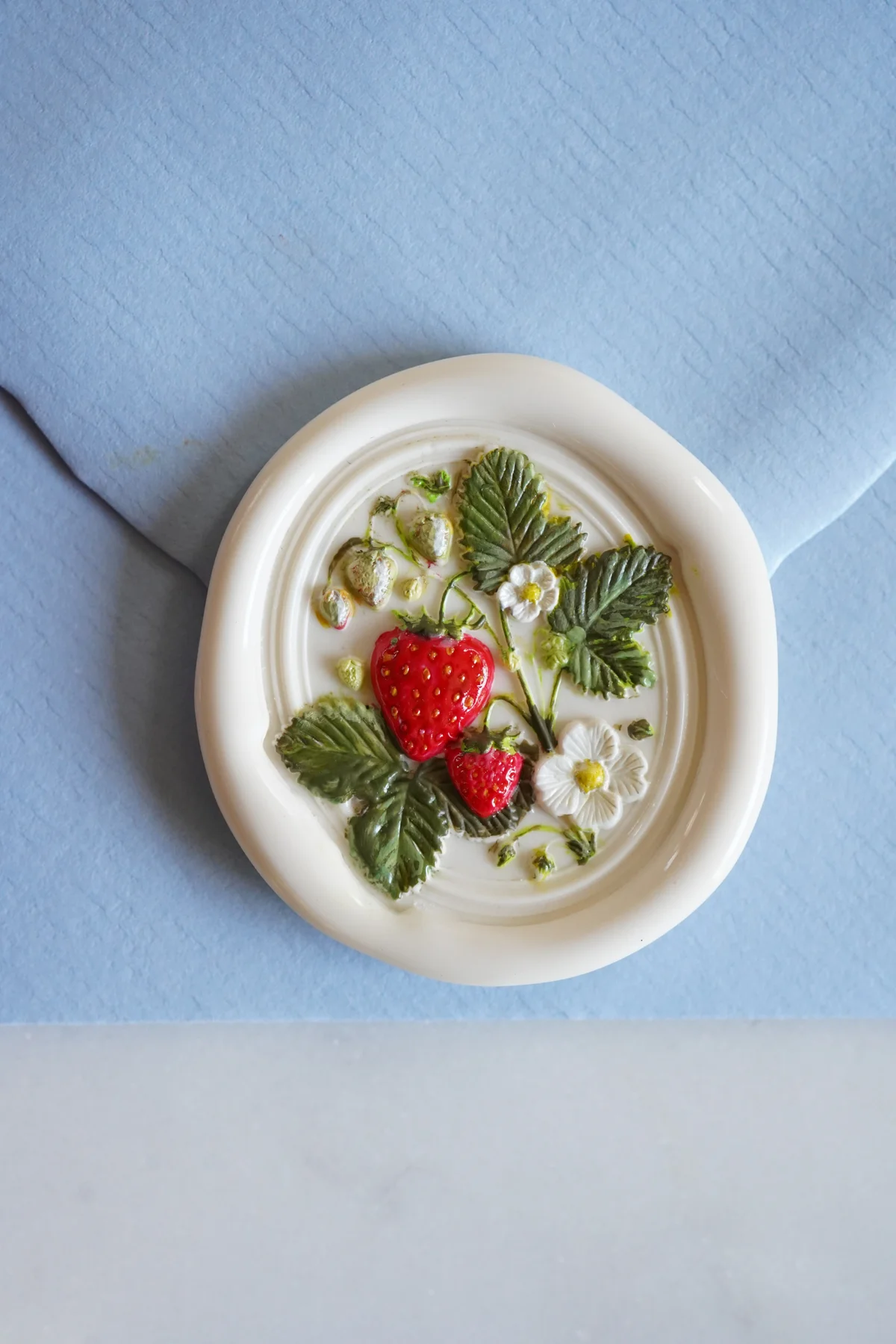
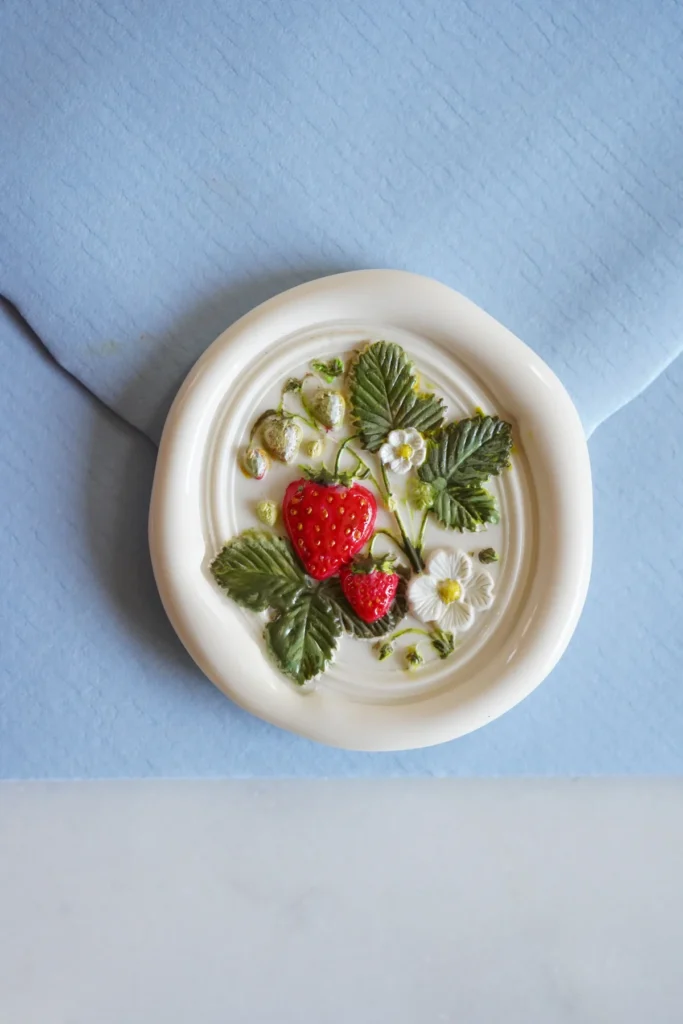
Her name is Kathryn Hastings, an artist, writer, and the founder of Kathryn Hastings & Co., the wax-seal company you may have seen blowing up online. That series has been running since 2019, and it gives me a behind-the-scenes look at women building meaningful creative lives. Kathryn’s is built almost entirely around wax seals, designed to last for generations, and the way they bridge history and the present, in magazine features and in her podcast, retreats, and courses, has genuinely moved me. The single most repeated theme in our conversation? Slowness. As in, the whole point is to stop rushing. Here are the parts of the conversation that landed hardest, before her own closing thoughts.
What I’m not going to do
Kathryn grew up in Zephyr Cove, a small town on the Nevada side of South Lake Tahoe. The lake taught her to be genuinely part of nature, water, light, long outdoor days, which shows up immediately in the vibrancy of color she uses.
It also taught her to embrace risk. She was a freestyle skier, and somehow there was not a single year in high school where she wasn’t in the hospital with a sports-related injury. Looking back, that taught her something surprisingly useful: as long as nothing is fatal, you recover, you get back up, you try again. Putting out new work, especially when it’s unfamiliar, is one of the most vulnerable things an artist can do, and she’s comfortable with the vulnerability. The fear is still there but she’s made peace with it. The fear is just the price of doing something that matters.
The paleontologist who became a letter writer
As a kid she always made art, and one of her favorite memories is painting a portrait of her grandmother Neenie in fourth grade. It was Neenie who taught her to write letters in the first place, a gift that quietly shapes most of her work. For a long time she dreamed of being a paleontologist, and while she ended up excavating fossils in the field, she still spends most of her days uncovering forgotten traditions, studying old objects, and following the stories they carry. That impulse never left her.
Letters and wax seals are a real hoot to her, because they travel. A painting stays on a wall. A letter leaves your hand and begins its own life, moving through space, time, and other people’s mail. She thinks there is some permanence in that, and some impermanence, at the same time. The tradition is old, the objects outlast us, but the moment a stamp is pressed into warm wax, something brand new happens. That same design can keep traveling for generations. Which is why she wanted to share the work online in the first place. They’re not relics, they’re living traditions, and she thinks they still connect us in a way that feels deeply human.
Three words for her work: symbolic, heirloom, transformative
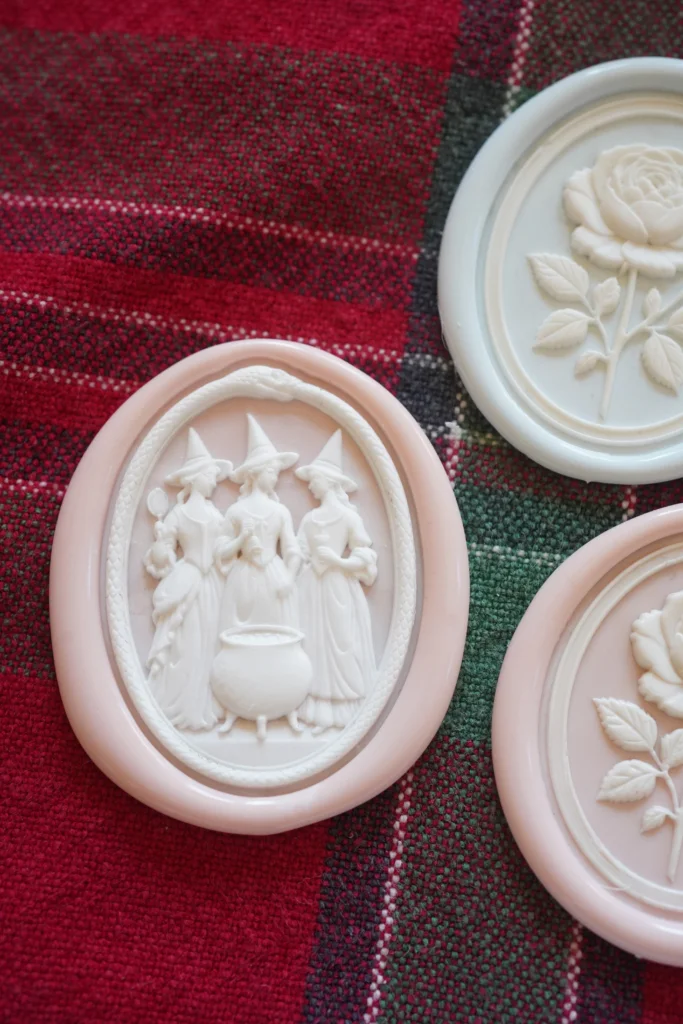
She makes objects in layers of meaning that draw from history, mythology, floriography (the Victorian and tradition of assigning meanings to flowers, from roses to lilies), and personal ritual. Heirloom, because the pieces are meant to outlive the person who made them, to be passed down and accumulate their own stories over time. Transformative, because the goal is never just to make something pretty, but to change the way people experience their days, to slow down a little, connect more deeply, and notice beauty in ordinary moments.
Block classes, and why she still works that way
She studied art history at Colorado College, which runs something called the Block Plan: instead of taking four or five classes at once, you take one course at a time and live inside it, completely, for three and a half weeks before moving on. It taught her how to focus with real intensity, to go deep rather than wide, and she still works that way. Half her senior paper was about the letters of Albrecht Dürer, and the more she read, the more fascinated she became with the letters themselves, their handwriting, their paper, the fact that they collapse the centuries between us. That’s where a seed got planted that turned into her life’s work.
Today she thinks of herself as part of a living tradition that stretches back thousands of years. Traditions survive because each generation chooses to carry them forward. So every piece she makes comes with a question: is this beautiful, and how does this object keep telling its story long after she’s gone?
The mother who finally let art lead
She was always an artist, but only after she got married and her son was born did she decide to do it for real. Her marriage was so easy and unforced that it made her wonder why the rest of her life, especially her work, didn’t feel that way. Her creative work had always existed at the edges, filling in the gaps between everything else. And then becoming a mother made her genuinely want a career that was as deeply aligned with who she is as her marriage already was. Art stopped being something secondary. It became the part of her that got to lead.
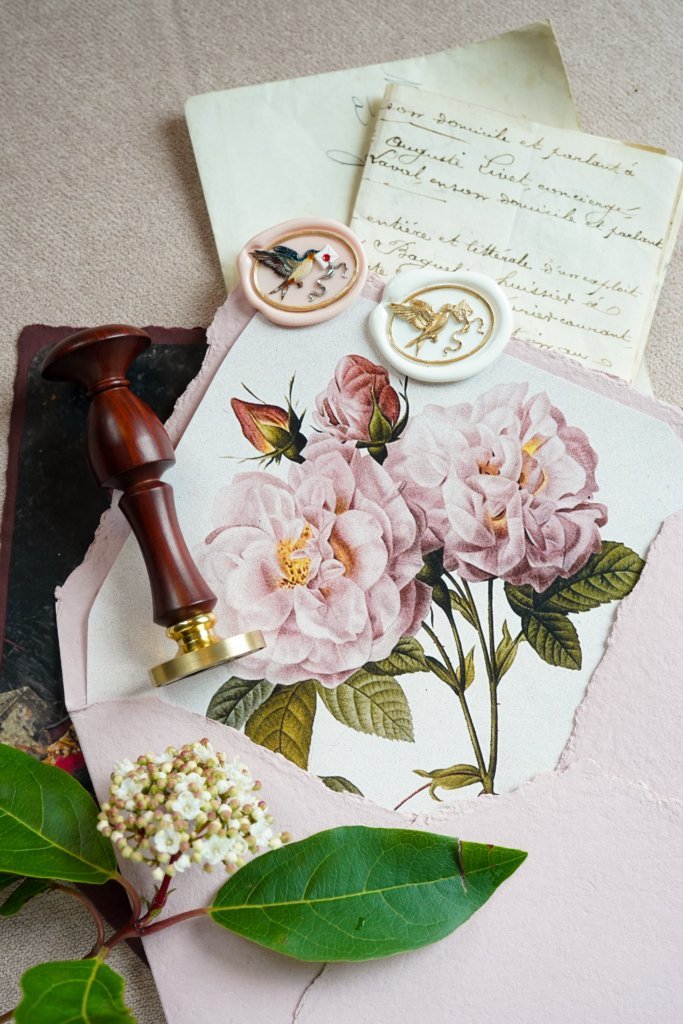
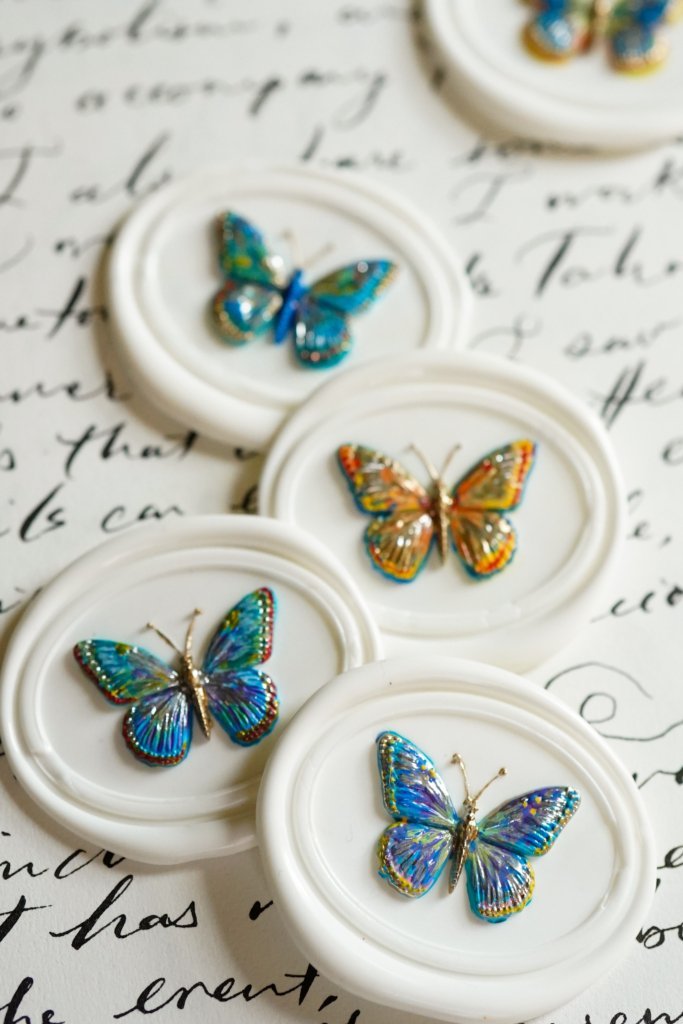
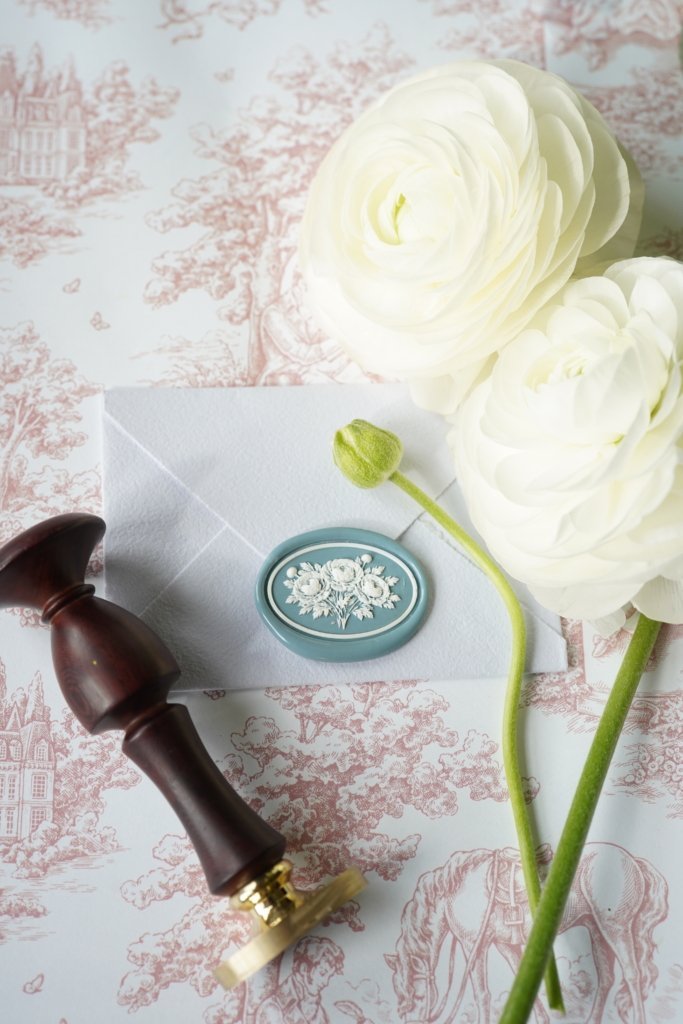
The project she’s proudest of is the Hastings Étui. It’s a handcrafted wax seal handle designed to hold interchangeable engraved stamp pendants. Instead of owning one stamp, collectors can assemble a personal collection of designs over time, so that the handle ends up telling its own continuing story. The inspiration came from a historic type of seal that had basically disappeared for centuries, and rather than just reproducing it, she wanted to reimagine it for today. The stamp becomes something that can grow with its owner for a whole lifetime, and it creates an ongoing conversation, not just between the person sending the letter and the person receiving it, but across generations.
Everything she makes is designed to last at least 300 years, and the Étui embodies that in every way. It’s extremely built, meant to be used, loved, and eventually passed down, and it was entirely designed and made in the United States. To her, it isn’t really a product. It’s a modern heirloom that revives an old tradition while inviting you to become part of its future.
Where the inspiration actually comes from
Everywhere. Her life and her art are tangled together to the point where she doesn’t see creativity as something outside of herself. Inspiration isn’t something she has to chase. It’s just the way she experiences the world. She finds it in nature, in the shifting of the seasons, in the quiet inner shifts of an emotional life. In history, especially in old objects and letters that have carried stories across generations. She gets caught up in cycles, the long arc of generations, the rhythms of the natural world, the symbolism of the zodiac. Because they remind her that she’s part of something bigger, and that there’s wisdom and beauty in paying attention to the things that keep coming back.
The same goes for how she meets people. The right people seem to just show up. A lot of her closest friends are fellow artists, but she’s drawn to anyone who’s genuinely obsessed with what they do. She could spend hours talking with a scientist, a poet, an archaeologist, or a master gardener. The common thread is always seeing the world in a different way. Those conversations almost always leave her seeing something she didn’t see before.
What her walls whisper to her
Kathryn’s studio reads like an old library, full of books, antique objects, and the debris of countless creative experiments. There’s a portrait of an antique knight hanging on the wall who, some people joke, follows you around with his eyes. She’s always experienced him as the guardian of the space. There’s an antique desk here that once belonged to her grandmother, along with antique wax seals, natural specimens, and basically every art supply that would ever need to exist. If inspiration strikes, she wants to be able to work with it right away.
It’s less a workshop, and more a curiosity cabinet, a place where history and craftsmanship actually live together.
The answer to burnout, which I stole for myself
She doesn’t really believe in creative slumps, or in needing to be constantly productive. She thinks creativity moves in seasons, just like nature does, and that the skill is in working with those rhythms instead of against them.
And it’s the most important thing she told me, because it’s how I run my own life now. If you’re making work for the rest of your life, sustainability beats productivity. She doesn’t force ideas or manufacture inspiration. She pays attention to what season she’s in. Some seasons are for making, others are for reading, watching, traveling, editing, or just letting new ideas take root. When she’s not with her family she’s creating in some form almost all the time, but it comes from real curiosity, not external pressure. Because the motivation is internal, she rarely burns out. After an intense stretch of travel, or of heavy editing or making, she gives herself time to recover. The next idea is already there, but she gives herself space to meet it.
I don’t judge the natural ebb and flow anymore. Every season has a purpose, and they all belong to the same bigger cycle. I used to apologize for the off months. Now the off month is just a season.
Her day, in short: first her family. Once everyone’s out the door, a cup of tea, the wax starts to warm up, and even if she only has fifteen minutes, she always begins the day by making something. Those first few minutes turn into four or five hours of focused work, though every day is a little different. Around 4 p.m. she steps away to do some Pilates, and by 5 p.m. she’s fully present with her family again, which matters to her. After the kids are asleep, another hour or two of quieter work, writing, editing photos, the little daily tail of the newsletter and social media. No two days are exactly alike, but the rhythm stays remarkably consistent: make in the morning, reconnect with her family in the evening, and return at night to something quiet and reflective. It feels less like she’s following a schedule, and more like she’s following the natural cadence of her own life.
On artists, critics, and growing old on purpose
The artists she admires span centuries. Giovanni Bellini’s quiet, tender Madonna and Child, and that luminous Venetian light, feel like finding a long-lost ancestor every time she sees his work. Albrecht Dürer, whose careful, meticulous draftsmanship transcends every category of art, is another lifelong influence. Joseph Cornell, whose boxes contain entire worlds, is what her own work is really about. An invitation into a little world where symbol, memory, and imagination meet.
Marcel Duchamp gave her permission to make her own rules. Every time someone questions whether what she’s making is enough, she thinks of Duchamp. Color field painters, whose work reminds her that color communicates on a deeper level than language. Hilma af Klint, who gave her the confidence to trust her own visionary work, because a lot of her creative process starts with vision and instinctive knowing. Jeff Koons, for the sheer ambition of the practice, which is the one she asks herself to inherit whenever the criticism gets loud. And Alexandra Grant, whose work is beautiful but whose clarity and conviction when she writes about art is what she admires most.
Right now she’s been deep in the engravings of Nicolas-Henri Tardieu, studying the symbolism woven through his work, and being struck, every single time, by how closely her own intuitions match what he was already thinking centuries ago. In music, it’s Gregorian chant, and the compositions of Hildegard von Bingen. They’re the thing that helps her get into a contemplative creative space.
On advice: in her senior year at college she got to visit the artist Chuck Close in his studio. He talked about deliberately placing constraints around his own work, because he knew he could imitate most of his other artists, and instead of doing everything, he chose to create within a set of self-imposed limits. She’s carried that with her ever since. Her own work spans a huge range of media, but the wax seal has become her primary canvas. At first glance it looks too small, almost too limited to hold much in it. And the opposite turns out to be true. Within a single wax seal, an entire universe can exist. The constraints of the medium have become a source of creativity, not a limitation.
Her most common piece of criticism is that her work is expensive. And at first glance it sounds like people are questioning the price, but she doesn’t think that’s really what they’re reacting to. I think they’re reacting to the fact that she’s taken a medium historically associated with craft and insisted on treating it as fine art. Which has actually strengthened her conviction, and made her think more deeply about who gets to live with extraordinary objects, and why we so often feel the need to justify beauty. For her, beauty isn’t frivolous. Living with beautiful objects can change the way we experience our homes and our days.
The skill she wishes she’d learned when she was younger: growing up a backbone. For years she was so sensitive to other people’s opinions that she edited pieces of herself to keep everyone else comfortable. Now she can just keep building. My job isn’t to convince everyone. My job is to keep building. Rainer Maria Rilke said that critics are very good at taking things apart, but not so good at building them. She’s learned that not every opinion deserves her attention.
The one thing she wants to become
When I asked her if there was anything more she wanted to become, she said it without a second of hesitation: an older woman. She turned forty this year, and by the time she was half her age she’d already lost a lot of friends, so she doesn’t take getting older for granted. It feels like a privilege. She just hopes to keep creating and learning for another forty or sixty years. She’s met four generations of her family, and her very personal hope is that she gets to meet seven. To become an ancestor while she’s still here, to be able to look into the eyes of the people who come after her, would be one of the greatest gifts she could imagine. Ultimately she doesn’t want to become anything other than herself. Just an older, wiser woman who never stops making things.
Here’s where you can follow some of it: on {{link:https://www.instagram.com/kathrynhastingsco/|Instagram} or at the {{link:https://kathrynhastingsco.com/|Kathryn Hastings & Co. website}.
A note from Hazel: Two months ago I changed my mornings. Not a new routine, exactly, but I stopped doing the thing I thought I was supposed to do, the 20-minute meditation, the perfectly plated bowl, the green juice for three weeks. Now it’s a glass of water, three deep breaths, and a few minutes of something with my hands. Some mornings that’s a straw. Some mornings it’s actually nothing. 80/20 is enough.