
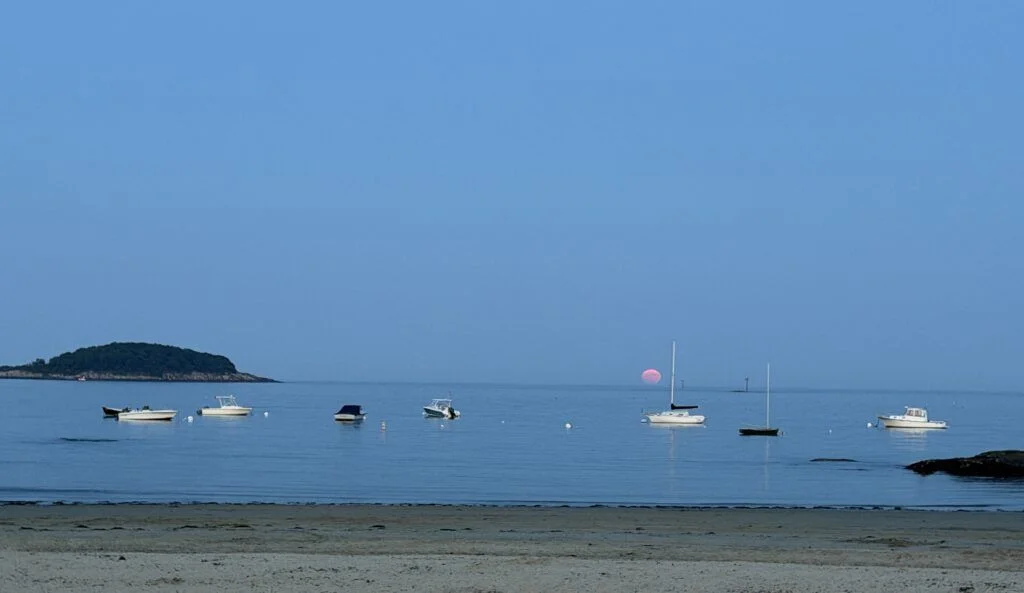
I used to think I needed to plan every summer evening. A picnic basket perfectly packed, a walk timed to the sunset, maybe candles lit on the deck before dinner. Then one June night last year I pulled on my cardigan, grabbed my mug of tea from the kitchen counter, and just drove to the beach.
That was the night I finally saw the Strawberry Moon.
The Strawberry Moon is the first full moon of summer, arriving in late June. In the Northern Hemisphere it sits lower on the horizon than any other full moon of the year, which gives it that soft golden glow at moonrise. Some people say it looks pinkish as it comes up — fitting for strawberry season, if a little romanticized.
I had tried several times over the years to catch it. Living near the ocean means clouds and fog often steal the show. That weekend in particular, the coast was socked in with thick fog, so I figured my chances were slim.
But that day turned out gorgeous and cloud-free, so I decided one more try couldn’t hurt.
I drove to West Beach in Beverly Farms, Massachusetts — about two miles from home. (I still have no idea why it’s called “West” Beach when the whole area faces east or southeast. Some things you just let go.)
A website told me the moon would rise at 8:42 pm. I arrived a couple of minutes early. At 8:40, the sky was still pure blue. No sign of anything. At 8:42, still nothing.
Then, out of nowhere, a faint orange orb appeared on the horizon.
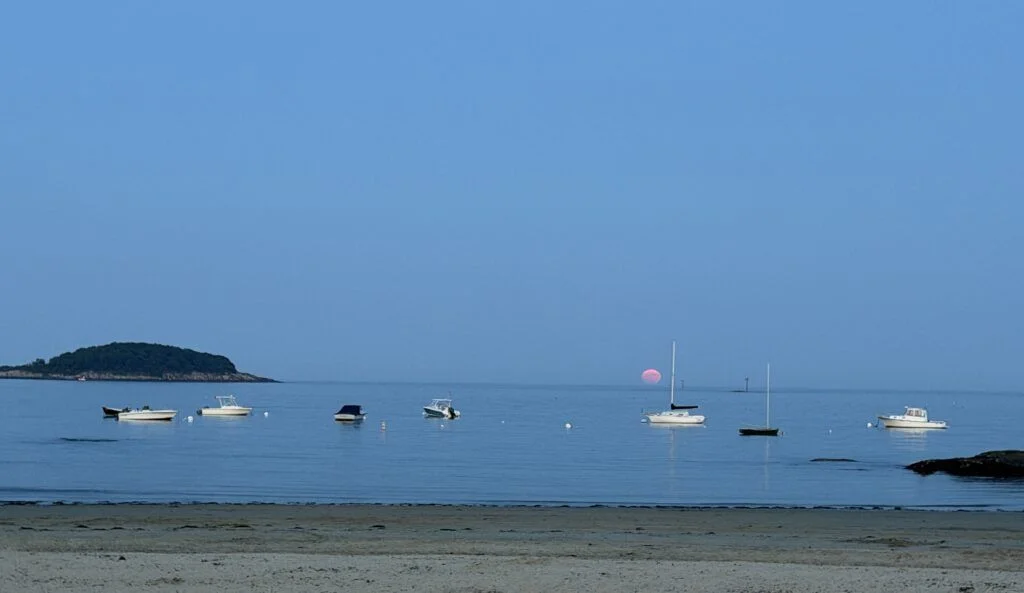
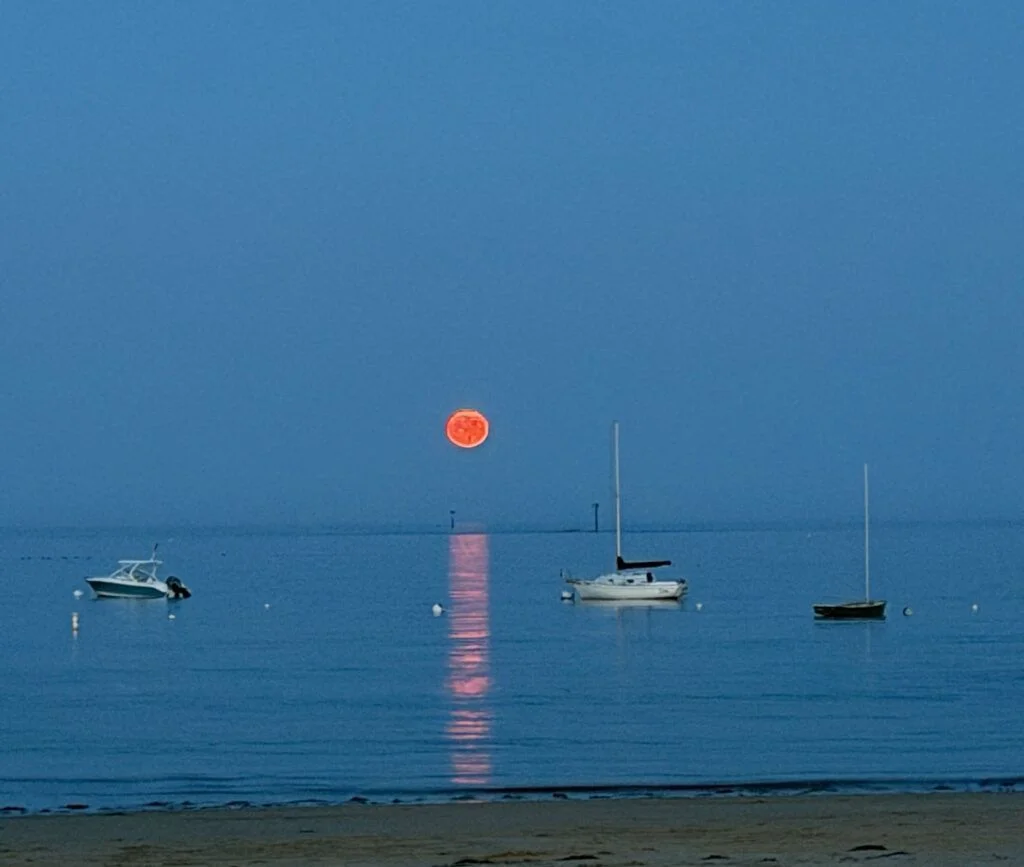
As it rose higher, the color deepened and the moon seemed to grow larger. There’s something about watching that happen slowly that feels like a reset — not a chore or a checklist item, just three deep breaths worth of quiet.
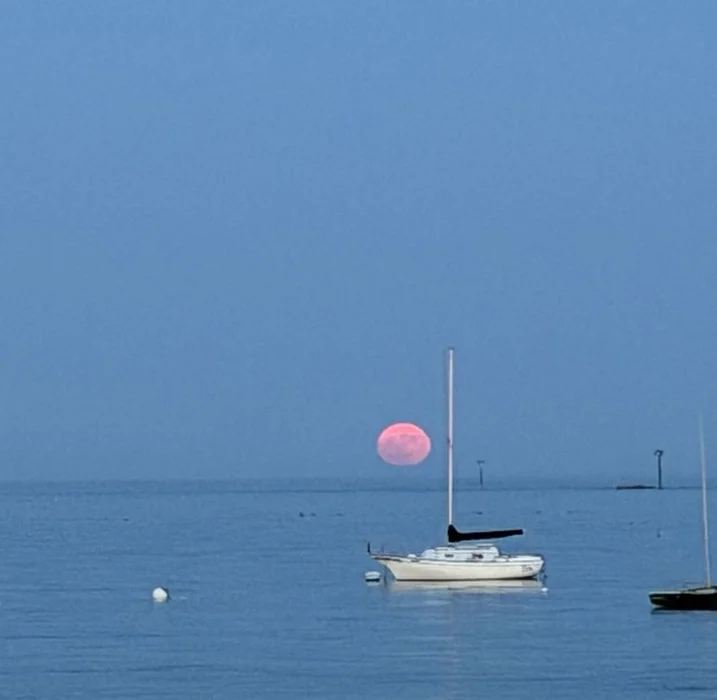
The reflection on the water was beautiful too. A long golden path stretching from shore to horizon, shimmering with every small wave.
By the time I got home and looked out my window, the moon had shifted to a butterscotch shade through the trees. Still big. Still glowing. What a lovely way to spend a summer evening.
A Quick Guide to Catching the Strawberry Moon
If you want to see it next year, here’s what helps:
- Find an open horizon. The Strawberry Moon sits low in the sky, so a beach or hilltop gives you the best view. Even two miles worth of driving makes a difference when clouds are patchy.
- Arrive a few minutes early. Check your local moonrise time and get to your spot before it happens. The first moments of color change happen fast, and they’re the most magical part.
- Don’t need perfect conditions. A partly cloudy night can actually make the moonrise more dramatic — just wait for a break in the clouds.
Small shifts, big difference. You don’t need a telescope or a planned itinerary. Just show up, take three deep breaths, and let the sky do the rest. 80/20 is enough.
Frequently Asked Questions
Why is it called the Strawberry Moon?
The name comes from Native American traditions who used this full moon to mark strawberry-harvesting season in late June. The pinkish hue at moonrise is a happy coincidence — the moon isn’t actually red or pink; atmospheric scattering makes any low-lying full moon look golden or orange.
Can you see the Strawberry Moon from anywhere?
Yes, it’s visible anywhere in the Northern Hemisphere. The lower angle and golden color are most dramatic near the horizon, so locations with unobstructed views — beaches, open fields, hilltops — offer the best experience.
What if you miss moonrise?
The full moon stays bright all night. You’ll lose that golden-orange color once it climbs higher and shifts to white or butterscotch, but it’s still a beautiful sight from your kitchen window or backyard.
A note from Hazel: I keep thinking about how many summer evenings I’ve spent scrolling on the couch instead of just stepping outside for ten minutes. The Strawberry Moon doesn’t care if you have time. It’ll be there next June too — and so will the one after that.