
I used to think staying healthy meant eating right and sleeping enough. Then the pandemic happened, and I found myself deep-diving into airborne transmission science like a person who really needed a hobby.
A few years in, I still think about it daily. Not because I’m anxious — well, not only that — but because some of these tools genuinely make life easier. So here’s a practical guide to what I actually use outside of vaccination. Some of this science is still evolving, and I’m doing my best to separate what we know from what we’re still figuring out.
A quick note upfront: I’m not immunocompromised, so my approach to balancing infection risk with living a normal life might look different from yours. But the basic principles apply whether you need extra protection or just want fewer sick days on your calendar.
How germs actually spread
Let me start by clearing up three things that still confuse people:
Getting sick doesn’t train your immune system the way we used to think. The microbes that build immunity aren’t the ones making you miserable. There’s evidence that some viruses, including COVID-19, can actually disrupt your immune response temporarily — making you more vulnerable to catching other bugs afterward.
“It’s not COVID” doesn’t mean it isn’t COVID. Symptoms vary wildly between people and variants. Sometimes it feels like a slightly upset stomach or just being off. People aren’t great at self-testing, either.
Cold viruses spread through the air, not surfaces. The droplet theory was debunked pretty thoroughly around early 2021 by some very persistent scientists. That means a lot of early pandemic habits — wiping tables, six-foot rules, face shields — weren’t actually doing much against respiratory viruses, though they still help with other germs.
The medical establishment has been slow to accept airborne transmission, so you’ll still see handwashing-first advice everywhere. But the simplest way to think about it: imagine germs moving like smoke as people breathe and talk. To avoid getting sick, focus on breathing less of other people’s exhaled air.
CO2 monitors: seeing the invisible
I try to socialize outdoors or in well-ventilated spaces. It doesn’t eliminate risk, but it cuts it down dramatically — leaving mostly face-to-face interactions as your main exposure.
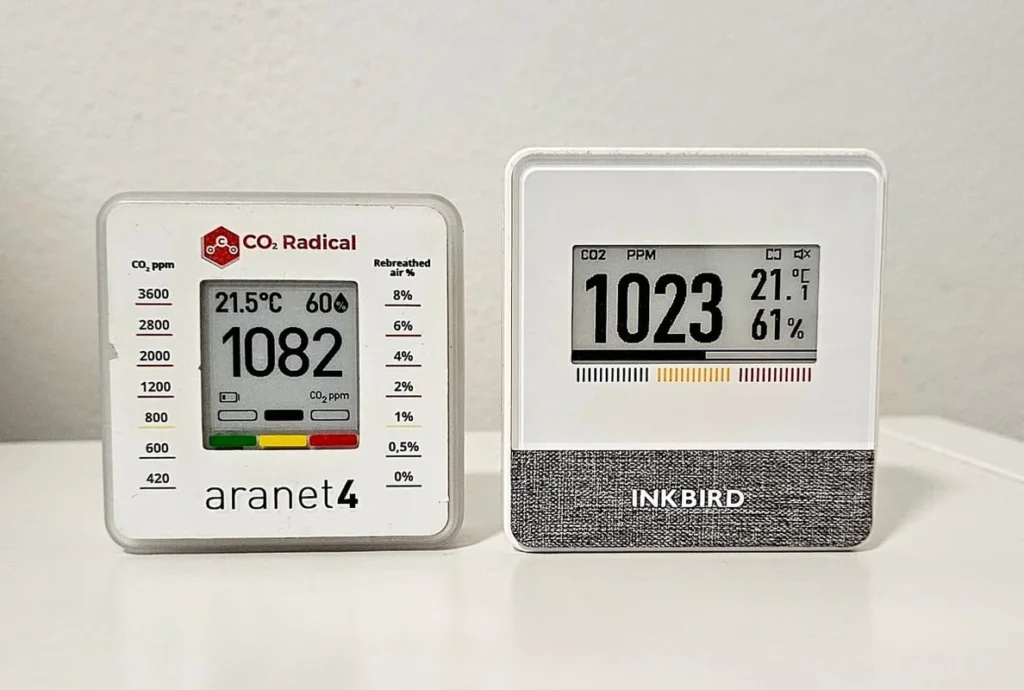
A portable CO2 monitor is the most practical tool for checking ventilation quality. Think of it like a UV index for indoor air: higher numbers mean more exhaled air circulating around you.
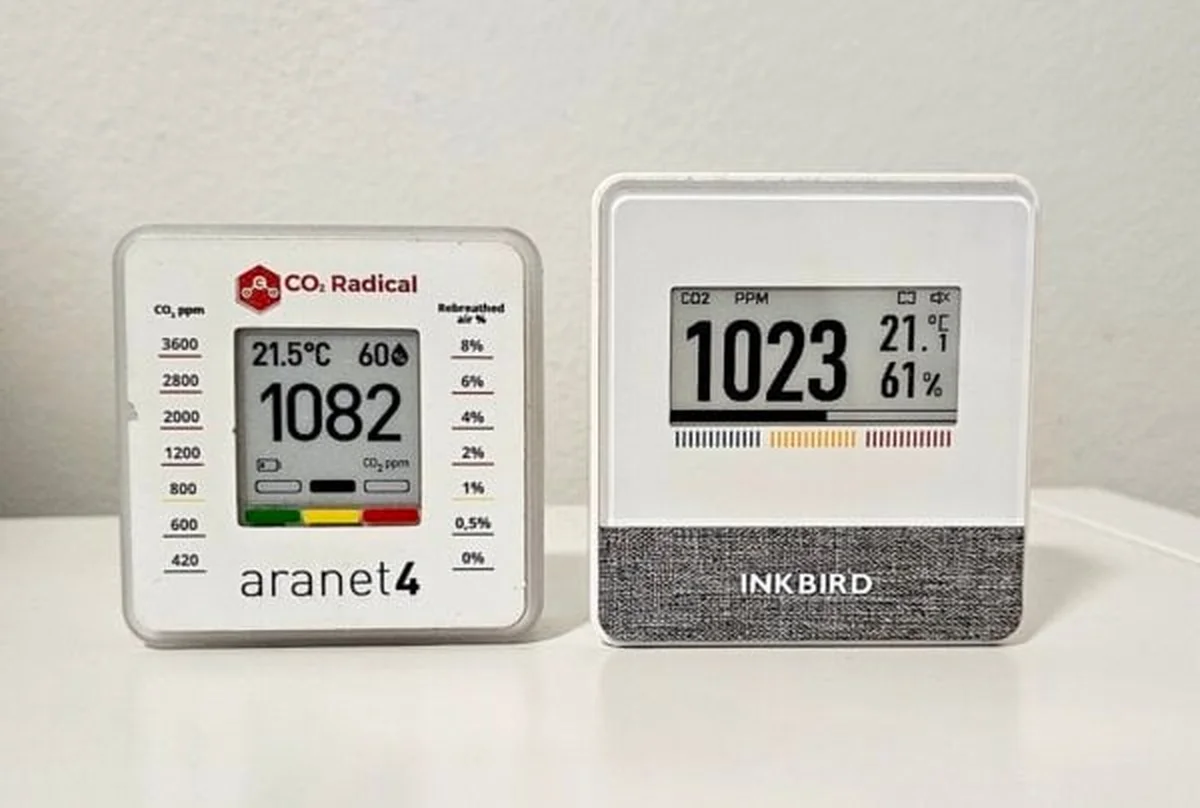
My office ventilation, captured on camera.
Ventilation levels are unpredictable. Some obviously risky places — planes, buses — and some obviously safe ones — an uncrowded room with a cross-breeze — are easy to call. But you’d be surprised: a gym blasting cold AC can feel great while recycling stale air, and some restaurants turn out to have excellent airflow.
A CO2 monitor lifts the fog. I’ve heard someone compare it to playing a video game where suddenly you can see where all the monsters are on the map.
My general rule of thumb: below 600 ppm, I’m mostly only at risk from people nearby. Above 1000 ppm, I try not to linger or I put on a respirator.
Which monitor to get
The Aranet4 Home is excellent — the battery lasts forever and it syncs with your phone for really nice graphs. The Inkbird is less rugged but more budget-friendly. Both work well, so pick whichever fits your lifestyle.
I’ve found having a monitor handy at home too. It’s how I realized we needed to crack open a bedroom window at night — when CO2 creeps up to 3000 ppm overnight, mornings get noticeably groggier. It also builds up surprisingly fast in cars and small rooms, even with just one person inside.
Note: if you have air purifiers or HEPA filters running, the air is cleaner than CO2 alone suggests. Planes have high CO2 readings mid-flight but excellent filtration — though those systems often shut off while on the ground. I keep a respirator on until we’re in the air.
Respirators (N95/P2 masks)
These protect you from breathing in germs far better than surgical or cloth masks. The most important thing is fit — how well it seals to your face matters more than the brand.
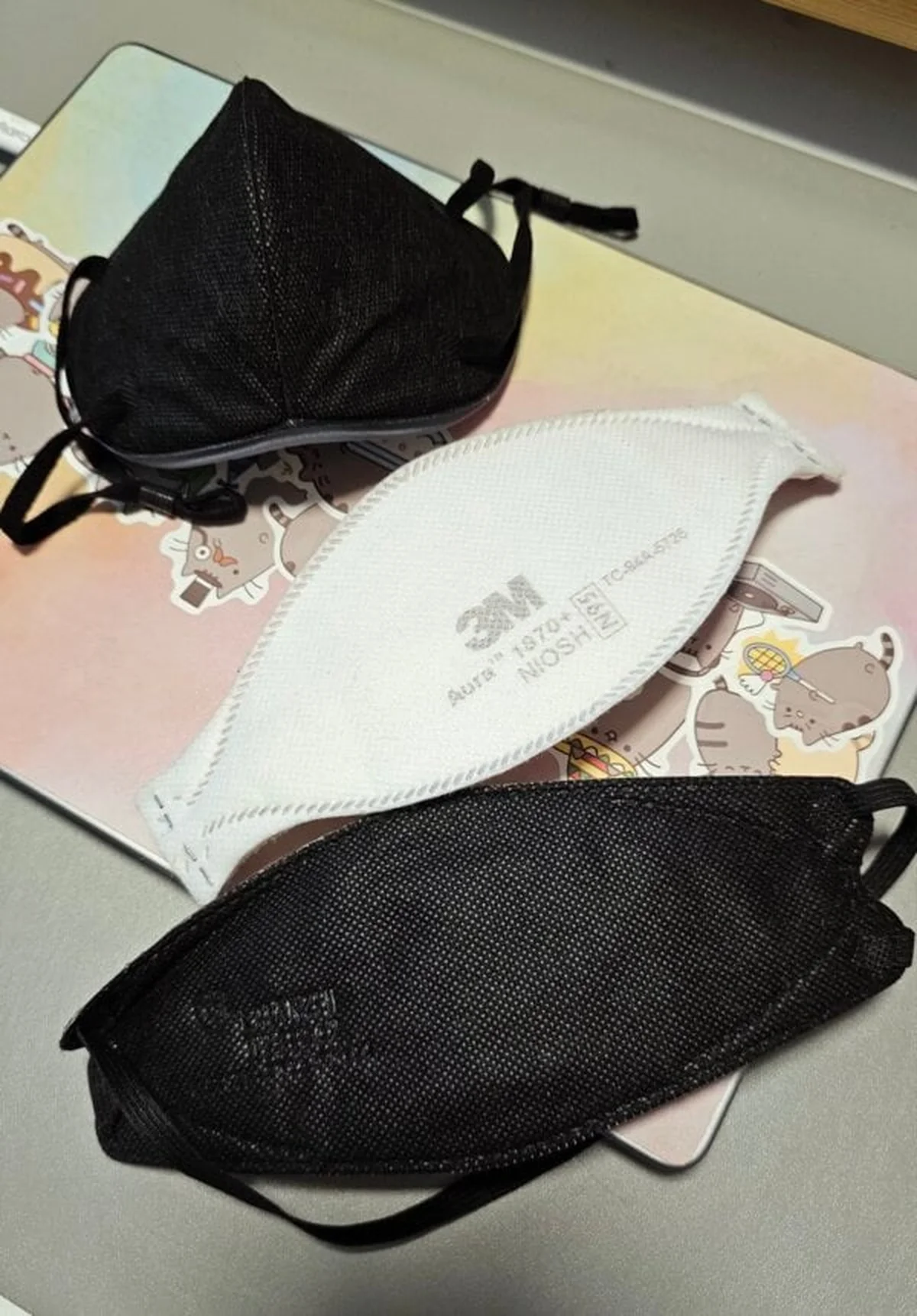
From top: Zimi, 3M Aura, Laianzhi.
A few things I wish I’d known earlier:
- You don’t need a new mask each time. Use them until the filter material wears out or they stop sealing properly.
- You don’t need formal fit testing. A simple seal check tells you most of what you need to know for everyday use.
- Soft N95s generally fit better than cup-style ones, and headstraps seal better than earloops — but it comes down to your face shape.
The 3M Aura: my favorite
The 3M Aura is the mask I reach for most often. It has very high filtration from electrostatic material, and that boat-shaped design fits upwards of 90% of people. It sits off your nose and mouth, which means no ear-loop pain — and I’ve fallen asleep in these on planes more times than I can count.
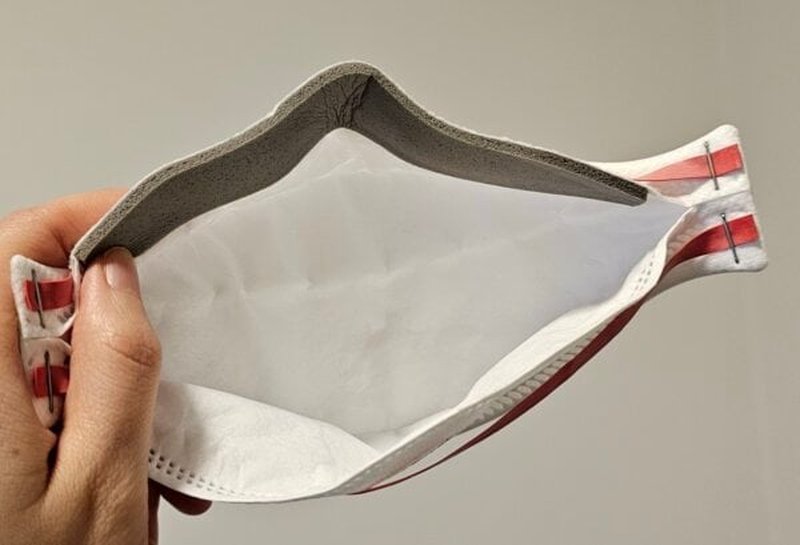
Aura mask from the inside: there’s a nose wire tucked under the foam.
They’re around $5 AUD each (roughly $3 USD) at hardware stores, or as low as $2 each in bulk from an online medical supplier. There are several models — 1870+, 9320A+ — but the differences aren’t huge. Look for that distinctive boat shape.
If your face runs smaller, stapling the under-chin flap can help create a tighter seal. Paper tape works too.
Other masks I use
The Laianzhi HYX1002 is that black mask in my rotation for lower-risk situations. It’s a KN100 (Chinese equivalent of N95) with a similar boat design and fabric straps. Slightly less breathable than the Aura, but comes in small, medium, large, and gradient versions.
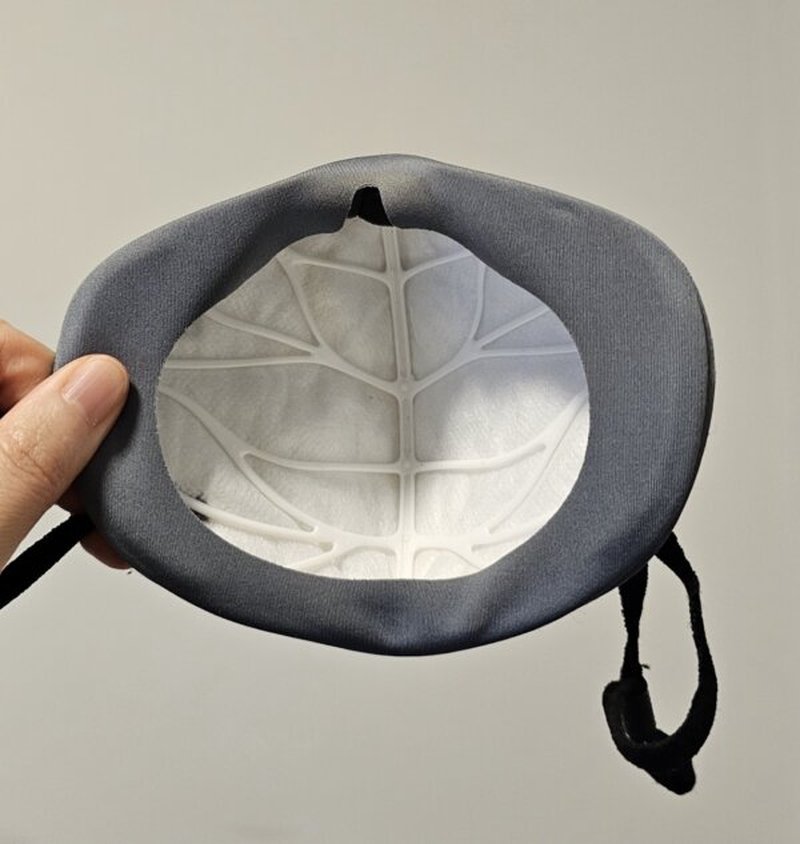
The shroud inside the Zimi mask — what makes it seal so well.
The Zimi Air is a really clever design: a frame that holds a filter with an inner gasket. It seals tightly without pressing hard against your face, which is great if you want to avoid marks or mess up your makeup. The trade-off is setup — you need to experiment with foam strips and do some fit testing yourself.
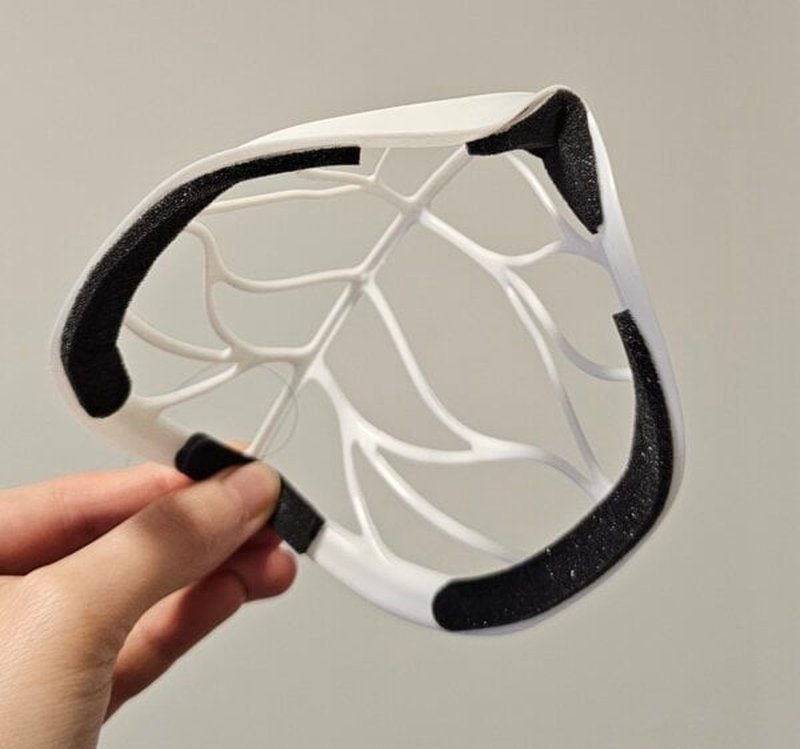
My customized Zimi frame with foam strips added for a better seal.
If N95s aren’t your thing
The Trident respirator is basically an Aura with tighter straps — it scores highest in fitting studies and comes in smaller sizes, plus grey and pink versions. If you really hate headstraps or have a small face, a boat-shaped earloop KF94 might work well. Brands like Venishoo and Good Manner make nice ones, often available at K-beauty stores.
Useful resources on masks: {{link:https://www.masks4all.com/wiki|Masks4All Wiki}}, {{link:https://masknerd.substack.com|Aaron Collins (Mask Nerd)}}, Gerard Hughes, Respirator News and Reviews
Air purifiers: laminar flow vs. standard
Most air purifiers create a turbulent stream of air that pulls in surrounding “dirty” air by the time it reaches you. The AirFanta 4Lite is different — it’s a laminar air flow purifier, which maintains a clean stream over a longer distance. You can actually eat dinner right in front of it while breathing cleaner air.
There’s also the AirFanta Wear — a pair of purifiers that hang off your neck like headphones and aim clean air at your face. The coverage area is small, though, so treat it as an addition to precautions, not a replacement for a mask.
The engineer behind these, Adam Wong, shares regular updates on X (formerly Twitter). A surprising amount of technical COVID discussion still happens there.
Far UVC light
Far UVC refers specifically to 222 nm wavelength. It can effectively kill airborne germs while causing minimal harm to human skin and eyes — at least, that’s what the current research suggests.
Important distinction: most UVC is not Far-UVC. Regular UVC is much more dangerous — there was an event where attendees got temporarily blinded by standard UVC lighting, which is why picking the right wavelength matters.
Safety questions remain, especially since many products list incorrect specs. But it’s promising technology for travel, dental offices, or restaurants. I own a set of Nukit torches and used them at high-traffic areas during my wedding. {{link:https://nukit.co|Nukit}} is also one of the few brands that seems genuinely responsible about how they design, test, and advertise their products.
Standard air purifiers
Regular HEPA air purifiers are useful for cleaning room air when ventilation isn’t great — classrooms, offices, hotel rooms with central AC, or at home when you’re trying to limit spread. They also remove smoke and pollen nicely.
What to look for
The key spec is CADR (Clean Air Delivery Rate). Higher means faster cleaning. It usually means louder too, but there are exceptions.
- For room cleaning, high CADR matters more than filter type — passing more air through a slightly less effective filter removes more particles overall
- Purifiers work best placed toward the middle of the room and closer to the sick person
- Built-in UV is mostly useless and can even be harmful; carbon filters remove smells but reduce CADR
{{link:https://cleanairstars.com|Clean Air Stars}} has a recommendation tool for products. I usually go straight to their spreadsheet and sort by CADR.
What I use at home
I have an IKEA Starkvind that runs on low all the time — it helps with allergies. If either me or my husband is coming down with something, we crank it up and add a Levoit 300S on his side of the bed with windows open. I don’t think this setup stops COVID entirely, but I’m pretty sure it’s why I managed to dodge two nasty colds he had last year.
The Levoit 300S is small enough for a medium suitcase, so it travels well. Both my classroom and dentist use Samsung Ultimate Air Purifiers — effective, quiet, and actually nice-looking.
Checking COVID levels
More sick people means more germs in the air. I treat it like checking the UV index before going outside: when levels are high, I scale back on riskier activities.
{{link:https://www.mikehoney.com|Mike Honey}} posts weekly stats updates for Australia and translates them into real-world infection probabilities — very practical framing.
Nasal rinses
Most studies show nasal rinses reduce sickness duration and allergy symptoms. In theory, they could also wash away germs stuck in your nasal mucus before they take hold. I don’t think they’re a substitute for clean air, but they’re low-risk.
If I’ve been somewhere higher risk — a holiday dinner, a dental appointment — I do a rinse when I get home. I use a NeilMed bottle with disposable sachets.
Nasal sprays
Some nasal sprays could theoretically block viruses from binding or kill them on contact. They’re hard to apply consistently, though, so again — not a substitute for other precautions, but a nice addition.
- Azelastine (like Azep) is an antihistamine spray with promising clinical trials for preventing respiratory viruses
- Iota-carageenan (Flo Travel Spray, Vicks First Defence Nasal Spray) has a few trials and seems lower risk for regular use
- Oxidizing sprays (nitric oxide, HOCl) — less studied for safety; I’d reserve them for occasional use only
The Morning Reset: your clean-air checklist
Here’s a five-minute morning routine to keep on autopilot:
- 1 minute: Check your CO2 monitor. Above 1000 ppm? Open a window or turn on the purifier.
- A few minutes: Pack your go-bag — one respirator, one nasal spray, one pair of glasses chains for mask straps. Keep it in your bag or drawer so you always have it ready.
- A couple of minutes: Quick mental scan of today’s indoor plans. Any flights? Dental appointments? Crowded meetings? If yes, plan which precautions to layer on.
Small shifts, big difference. You don’t need to do everything perfectly — 80/20 is enough.
Frequently asked questions
Do I really need a CO2 monitor?
It’s not essential, but it makes decision-making much easier. Without one, you’re guessing about ventilation quality — and your guesses are often wrong because good airflow doesn’t always feel like cool air.
Can I reuse my N95 mask?
Absolutely. Use it until the filter material degrades (it gets harder to breathe through) or the seal no longer fits well. One soft N95 can easily last many uses before you need a replacement.
Is far UVC safe for everyday use?
The research is still evolving, and many products list incorrect wavelength specs. Stick to reputable brands like Nukit that are transparent about testing. Avoid non-Far-UVC products (anything not specifically 222 nm) around skin and eyes.
A note from Hazel: I used to think my daily health routine had to look like a wellness magazine spread — matcha ceremonies, foam rolling at sunrise, the whole thing. These days it’s a glass of water, three deep breaths, and checking that air purifier is actually on before I start cooking. That’s it. And it’s enough.
Related posts you might like:
- {{link:URL|The Morning Reset: 5 Minutes to Start Your Day Without Burnout}}
- {{link:URL|Gut Health Basics: What Actually Moves the Needle}}